
Contact us
Published:
25.04.2023
Last Updated:
17/2/2026
17.2.2026

Cryptocurrencies and Citizenship by Investment: Debunking 4 Myths

By
Priscilla Mifsud Parker
(
Senior Partner
)
Jean-Philippe Chetcuti
(
Managing Partner
)
Scroll to explore
what's inside

A practical legal guide to how crypto-origin wealth is assessed in citizenship and residence applications – and what decision-makers actually look for.

Crypto wealth can be compatible with citizenship or residence planning, but only when it is documented, auditable and bankable. The decisive issue is rarely “crypto vs non-crypto” – it is whether the applicant can demonstrate lawful wealth creation, clean counterparties, and a credible funds trail that meets enhanced due diligence expectations.

full article

As cryptocurrencies like Bitcoin and other digital currencies reached record highs in 2021, Citizenship By Investment (CBI) programs gained traction as successful crypto entrepreneurs and crypto investors bought into the perks offered by second citizenship. However, the interaction of cryptocurrencies with the CBI sector has led to some confusion and misinformation. In this article, we will debunk some of the most common myths and misconceptions surrounding the impact of cryptocurrencies on the world of CBI.

Myth #1: You can Acquire Citizenship with Cryptocurrencies

One of the most pervasive myths surrounding CBI and cryptocurrencies is that a crypto investor can simply use digital assets to acquire citizenship in a country offering an investor route to citizenship. While qualifying investment classes under some CBI programs include real estate, start-ups, investment funds and government bonds, none of them currently allow applicants to qualify through a donation in cryptocurrency. This is largely due to the regulatory uncertainty surrounding cryptos, a lack of familiarity with crypto-generated wealth and lacking sophistication in methods for tracing and auditing source of wealth in this area to the high due diligence standards demanded by CBI programs.  Moreover, governments are generally conservative when granting citizenship by investment and have so far shied away from allowing crypto investments or donations towards naturalisation by investment.

Myth #2: A Combination of Cryptocurrencies & CBI Programs Provide High Money Laundering Risk. 

Another common misconception is that CBI programs are a convenient way to launder money using cryptocurrencies. In reality, this is far from the truth. CBI programs are often the subject of stringent anti-money laundering and counter-terrorism standards imposed by the OECD and FATF.  They impose strict due diligence checks and any applicant with a history of financial impropriety or criminal activity will be caught out by the various due diligence systems and ultimately rejected. The CBI due diligence checks extend to the tracing and auditing of any crypto wallets held and to verifications of the source of wealth records of the investor. Our specialist lawyers are able to provide source of wealth and crypto tracing reports.

Myth #3: CBI Countries are Embracing Cryptocurrencies 

While some countries, like Malta, have been more welcoming to cryptocurrencies than others, there is no evidence to suggest that CBI countries are particularly enthusiastic about digital assets. In fact, some CBI countries have expressed concerns about the potential for cryptocurrencies to be used for illicit activities such as money laundering and terrorism financing. Moreover, many CBI countries have small, tightly regulated financial sectors and may not have the capacity to deal with the complexities of digital assets. As a crypto-friendly citizenship jurisdiction, Malta’s investor residency route to citizenship is able to accept investor applicants who have made their fortunes with crypto-related ventures as long as they are able to prove their legitimate source of wealth.

Myth #4: Cryptocurrencies in Citizenship by Investment Act as Tax Evasion Schemes

It has been suggested that crypto investors may use CBI programs to hide their true origin or country of residence, leading to tax evasion. However, in practice, the banking system is subject to FATCA and CRS reporting obligations that refer to the effective country of tax residence of a depositor rather than their nationality.  A second citizenship, or even an alternative residency would not disguise the country of birth that is a minimum requirement on international passports.  Proving tax residency to one’s bank requires producing a certificate of tax residency which presumes the ability to prove to the satisfaction of the tax authorities that that person is sufficiently connected with the country through presence, commercial activity, investment holdings, family life, property ownership or other links to that country.

Thus, while cryptocurrencies and CBI programs may seem like natural bedfellows, the reality is that the two are not as closely connected as some people believe. Investing in CBI programs with cryptocurrencies is currently only possible if such currencies are first converted to FIAT, and then subject to source of wealth audits and wallet tracing to ensure the legitimacy of the funds accumulated through crypto activity.

European Citizenship Lawyers

Our European citizenship lawyers advise on the various citizenship and immigration routes in Europe.  We dedicate personal attention to each client and oversee each citizenship case individually.  We help our clients assess which European citizenship route best suits their objectives and whether they qualify for relevant laws.  As Maltese citizenship agents with extensive experience of Maltese citizenship and investor immigration, we offer a holistic coverage of all immigration and relocation and all relevant tax and legal services.

ACC Immigration Advisors (Malta company registration number C-44042) is duly authorised to act as a licensed Malta citizenship agent in terms of the Agents (Licences) Regulations, 2020 (L.N. 435 of 2020) and bound by the “Licence Agreement and Code of Conduct and Ethics for Agents” entered into with Community Malta Agency, under official Malta licence number AKM-ACCA-21.

Our Malta-citizenship Services for Crypto Investors

We specialize in assisting crypto investors with their residency and citizenship in Malta. Our services include:

  • Immigration advice: We provide expert guidance on the best-fit residency and citizenship programmes available in Malta, assessing your eligibility for such programmes.
  • Applications for Maltese residency and citizenship programmes: We are licensed filing agents but provide legal and tax expertise to compile a high-quality application file that you deserve to ensure that your application is processed efficiently.
  • Tax planning and advisory: We provide tailored tax planning solutions to ensure legal certainty of your favourable tax position in Malta.
  • Crypto source of wealth reports: We prepare reports confirming legal source of wealth and provide crypto wallet screening and AML and sanctions screening.

Copyright © 2025 Chetcuti Cauchi. This document is for informational purposes only and does not constitute legal advice. Professional legal advice should be obtained before taking any action based on the contents of this document. Chetcuti Cauchi disclaims any liability for actions taken based on the information provided. Reproduction of reasonable portions of the content is permitted for non-commercial purposes, provided proper attribution is given and the content is not altered or presented in a false light.


continue learning
what's inside

A practical legal guide to how crypto-origin wealth is assessed in citizenship and residence applications – and what decision-makers actually look for.

Crypto wealth can be compatible with citizenship or residence planning, but only when it is documented, auditable and bankable. The decisive issue is rarely “crypto vs non-crypto” – it is whether the applicant can demonstrate lawful wealth creation, clean counterparties, and a credible funds trail that meets enhanced due diligence expectations.

  • Crypto is not a qualifying investment class in most citizenship schemes – applicants typically need fiat funding and an auditable banking trail.
  • Source of wealth and source of funds must be explainable end-to-end, including wallet provenance, exchange activity, and conversions.
  • AML/CTF and sanctions screening apply regardless of whether wealth originated in crypto, and may be intensified for complex wallet histories.
  • Tax reporting does not turn on nationality – financial institutions generally test tax residence, not passport colour.
  • Regulatory attention is rising: FATF and OECD have highlighted how CBI/RBI structures can be misused and what strong safeguards should look like.

Cryptocurrencies like Bitcoin and other digital currencies reached record highs in 2021 while Citizenship by Investment (CBI) programmes have gained traction for wealthy individuals to obtain second citizenship. The relationship between cryptocurrencies and citizenship by investment has long been misunderstood. So here’s some clarity.

This update keeps the original myths (because they’re still very much alive) while reflecting the reality that policy scrutiny of “transactional” citizenship models has intensified globally, including at EU level. For example, the Court of Justice of the EU has criticised investor citizenship schemes that grant nationality “in exchange for predetermined payments or investments” as having a “transactional nature” amounting to the “commercialisation” of Union citizenship.

Myth #1: You can acquire citizenship with cryptocurrencies

One of the most pervasive myths surrounding CBI and cryptocurrencies is that a crypto investor can simply use digital assets to acquire citizenship in a country offering an investor route to citizenship.

While qualifying investment classes under some CBI programmes include real estate, start-ups, investment funds and government bonds, none of them currently allow applicants to qualify through a donation in cryptocurrency.

This is largely due to the regulatory uncertainty surrounding cryptos, a lack of familiarity with crypto-generated wealth and lacking sophistication in methods for tracing and auditing source of wealth in this area to the high due diligence standards demanded by CBI programmes. Moreover, governments are generally conservative when granting citizenship by investment and have so far shied away from allowing crypto investments or donations towards naturalisation by investment.

Practical planning note: Even where wealth is crypto-origin, most reputable routes still expect applicants to convert to fiat and evidence (i) provenance, (ii) conversion events, and (iii) clean onward banking trails.

Myth #2: A combination of cryptocurrencies and CBI programmes provides high money laundering risk

Another common misconception is that CBI programmes are a convenient way to launder money using cryptocurrencies. In reality, this is far from the truth.

CBI programmes are often the subject of stringent anti-money laundering and counter-terrorism standards, and the international direction of travel is towards more safeguards, not fewer. FATF and the OECD have specifically examined misuse risks and the controls programmes should implement (including due diligence depth, governance, and information-sharing).

They impose strict due diligence checks and any applicant with a history of financial impropriety or criminal activity will be caught out by the various due diligence systems and ultimately rejected. The CBI due diligence checks extend to the tracing and auditing of any crypto wallets held and to verifications of the source of wealth records of the investor. Our specialist lawyers are able to provide source of wealth and crypto tracing reports.

Reality check (the unglamorous bit): Crypto does not automatically equal “high risk”, but it often equals more work – because you may need to prove things traditional banking would have already packaged neatly for you.

Myth #3: CBI countries are embracing cryptocurrencies

While some countries have been more welcoming to cryptocurrencies than others, there is no evidence to suggest that CBI countries are particularly enthusiastic about digital assets.

In fact, some CBI countries have expressed concerns about the potential for cryptocurrencies to be used for illicit activities such as money laundering and terrorism financing. Moreover, many CBI countries have small, tightly regulated financial sectors and may not have the capacity to deal with the complexities of digital assets.

EU context matters: In Europe in particular, policy and judicial scrutiny has increased. The Court of Justice of the EU has criticised investor citizenship schemes where nationality is granted “in exchange for predetermined payments or investments” as “transactional” and amounting to the “commercialisation” of Union citizenship.

Crypto-friendly Malta

Malta is often cited as comparatively crypto-aware, and applicants with crypto-generated wealth may be accepted where legitimate source of wealth can be demonstrated to the required standard.

Separately, Malta’s framework has evolved, including a merit-based naturalisation route grounded in national law (often referenced as citizenship for exceptional services/merit).
This matters for positioning: it reinforces the idea that decision-makers increasingly focus on integrity, substance, and contribution, rather than simplistic “pay-to-passport” narratives.

Malta Citizenship by Merit (MCBM)

For eligible individuals, Malta’s citizenship by merit framework is a discretionary route based on exceptional services/contributions or exceptional interest, rather than a standardised “investment menu”. For crypto entrepreneurs, this can be relevant where the wider profile includes demonstrable public-interest contributions, strategic activity, or exceptional services – but it does not reduce the burden of evidencing clean source of wealth.

Myth #4: Cryptocurrencies in citizenship by investment act as tax evasion schemes

It has been suggested that crypto investors may use CBI programmes to hide their true origin or country of residence, leading to tax evasion.

However, in practice, the banking system is subject to international reporting obligations that refer to the effective country of tax residence of a depositor rather than their nationality. A second citizenship, or even an alternative residency would not disguise the country of birth that is a minimum requirement on international passports.

Proving tax residency to one’s bank requires producing a certificate of tax residency which presumes the ability to prove to the satisfaction of the tax authorities that that person is sufficiently connected with the country through presence, commercial activity, investment holdings, family life, property ownership or other links to that country.

Thus, while cryptocurrencies and CBI programmes may seem like natural bedfellows, the reality is that the two are not as closely connected as some people believe. Investing in CBI programmes with cryptocurrencies is currently only possible if such currencies are first converted to fiat, and then subject to source of wealth audits and wallet tracing to ensure the legitimacy of the funds accumulated through crypto activity.

How our Global Citizenship Lawyers can Help You

Our global citizenship lawyers advise private clients, founders, investors and family offices on citizenship and residence planning across multiple jurisdictions, with a focus on building decision-ready, compliance-robust application files.

Where wealth originates from digital assets, we help clients translate complex crypto histories into evidence that programme due diligence teams, banks, and third-party screening providers can actually rely on. This typically includes: (i) mapping the wealth story from first acquisition to present holdings, (ii) aligning wallet, exchange and banking records into a coherent chronology, and (iii) preparing supporting narratives that address the issues decision-makers care about most – lawful provenance, clean counterparties, and auditability.

We also coordinate cross-border input (tax, regulatory and banking) so the immigration strategy is consistent with the wider compliance position – because a strong application is not only about eligibility, it is about credibility.

Our Citizenship Services for Crypto Investors

We specialise in assisting crypto investors with citizenship and residence planning across multiple jurisdictions. Our services include:

  • Immigration and citizenship strategy: Identifying best-fit routes and eligibility, including timing, family structuring, and practical risks.
  • Application support: Preparing the application file and supporting evidence pack to a high standard, including consistency checks across documents and disclosures.
  • Tax and residency alignment: Coordinating advice to ensure immigration status, tax residence claims, and banking expectations are aligned.
  • Crypto source of wealth evidence: Supporting lawful source of wealth narratives, including wallet/exchange record analysis, transaction mapping, and AML/sanctions screening where appropriate.

About the Authors

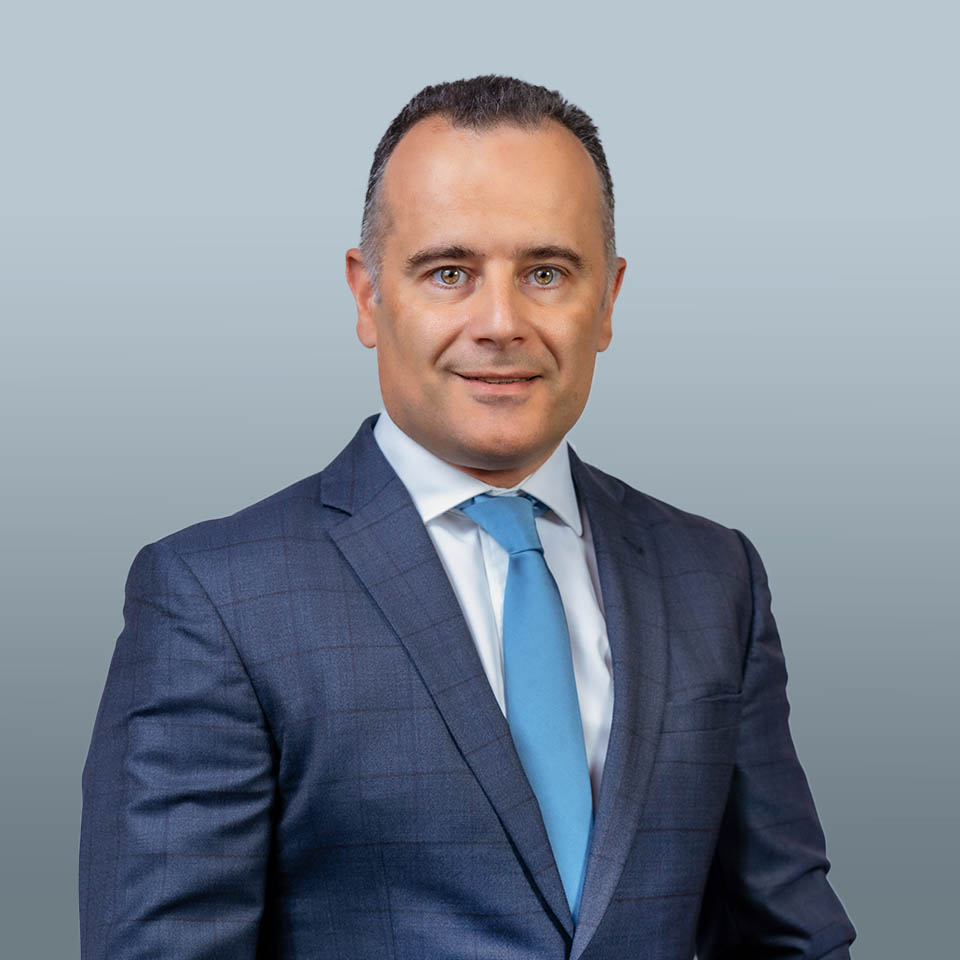
Dr Jean-Philippe Chetcuti

Jean-Philippe Chetcuti is Co-Founder and Managing Partner at CCLEX. He advises ultra-high-net-worth individuals, families and their advisors on global citizenship and residence strategy, international private client tax, and wealth, business and family office structuring, often in files where mobility planning must stand up to enhanced due diligence and cross-border disclosure expectations. Chetcuti is the author of the Dual Citizenship Report and the CCLEX Mobility Assets Spectrum and is credited with coining the Doctrine of Contributive Belonging.

Dr Priscilla Mifsud Parker

Priscilla Mifsud Parker is a Senior Partner at CCLEX and leads the firm’s Families & Wealth and Corporate, Trusts & Fintech practices. Her work focuses on trusts and estate planning, wealth structuring and asset protection, and advising entrepreneurs, international families and institutions on cross-border legal and tax alignment – including matters where digital assets form part of the overall wealth profile. Mifsud Parker was the chairperson of STEP Malta and is a regular contributor to prestigious industry journals including the STEP Journal: STEP Journal: Mifsud Parker on Digital Assets in Family Office Structures.

Crypto & Citizenship FAQs

[question]Can cryptocurrency be used to pay for a citizenship application?[/question]
[answer]In most cases, authorities expect qualifying contributions or investments to be funded through fiat and regulated financial channels. Crypto-origin wealth can still be used if it is converted to fiat and supported by auditable source of wealth evidence.[/answer]

[question]Do citizenship and residence routes accept applicants who made their wealth in crypto?[/question]
[answer]Yes, provided the applicant can evidence lawful source of wealth and source of funds, and satisfy integrity screening. Crypto activity usually increases documentation requirements because provenance and counterparties can be harder to verify.[/answer]

[question]What evidence is typically required to prove crypto source of wealth?[/question]
[answer]Common evidence includes exchange KYC profiles and statements, wallet addresses and histories, transaction logs, tracing from acquisition to present holdings, documentation of key counterparties, and a clear conversion-to-fiat narrative supported by bank movements.[/answer]

[question]Does a second citizenship reduce CRS or FATCA reporting exposure?[/question]
[answer]No. Financial institutions assess reporting based on tax residence and controlling person status, not simply nationality. You may still need to produce tax residence evidence and consistent disclosures across banks, advisors, and authorities.[/answer]

[question]Is Malta’s current citizenship framework “citizenship by investment”?[/question]
[answer]Malta’s post-2025 direction focuses on merit-based naturalisation under the Maltese Citizenship Act and implementing regulations, assessed case-by-case and preceded by legal residence. It should not be framed as a transactional purchase model.[/answer]

[question]Can CCLEX assist with wallet screening and source of wealth reporting?[/question]
[answer]Yes. We support the preparation of source of wealth packs for applicants with digital asset exposure, including structured documentation, wallet screening, and AML/sanctions checks, aligned to the expectations of third-party due diligence and regulated intermediaries.[/answer]

Copyright © 2026 CCLEX Global. This document is for informational purposes only and does not constitute legal advice. Professional legal advice should be obtained before taking any action based on the contents of this document. CCLEX disclaims any liability for actions taken based on the information provided. Reproduction of reasonable portions of the content is permitted for non-commercial purposes, provided proper attribution is given and the content is not altered or presented in a false light.

CRYPTO & CITIZENSHIP BY INVESTMENT
Contact us

Speak to a
Citizenship Lawyer

Speak to a
recognised expert