Contact us
Published:
13.11.2026
Last Updated:
13/11/2026
13.11.2026

European Golden Visa for Indians

reading time
By
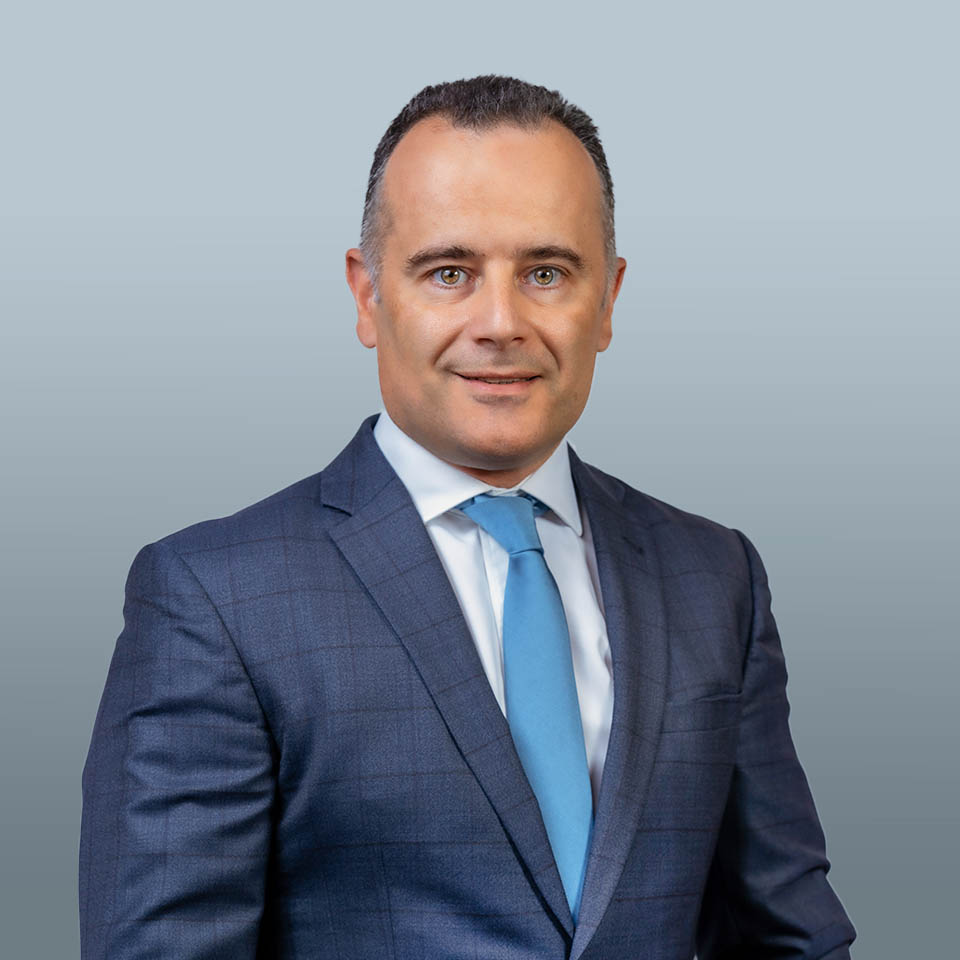
Dr. Antoine Saliba Haig

Partner, Immigration & Global Mobility

Advises private clients on tax residency, relocation and personal tax planning.

Scroll to explore
what's inside

For Indian investors and internationally mobile families, European residence programmes can provide more than the right to live in another country. They can offer greater flexibility when travelling, access to a European base, and the possibility of relocating family members while maintaining professional and commercial interests in India.

Several European countries have introduced residence programmes for non-EU nationals who make qualifying investments or satisfy specific financial requirements. However, these programmes differ considerably in their structure, investment thresholds, residence rights and ongoing obligations.

For Indian nationals considering European residency, Malta, Greece and Portugal remain three options worth examining. Each offers a different approach: Malta provides a permanent residence programme based on property (rental or purchase) and government contributions; Greece offers a residence permit linked principally to qualifying real estate investment; and Portugal retains an investment-based residence route through selected non-real-estate investments.

This guide compares the principal features of these programmes and highlights the considerations Indian families should take into account before choosing a route.

full article

Copyright © 2025 Chetcuti Cauchi. This document is for informational purposes only and does not constitute legal advice. Professional legal advice should be obtained before taking any action based on the contents of this document. Chetcuti Cauchi disclaims any liability for actions taken based on the information provided. Reproduction of reasonable portions of the content is permitted for non-commercial purposes, provided proper attribution is given and the content is not altered or presented in a false light.

continue learning
what's inside

For Indian investors and internationally mobile families, European residence programmes can provide more than the right to live in another country. They can offer greater flexibility when travelling, access to a European base, and the possibility of relocating family members while maintaining professional and commercial interests in India.

Several European countries have introduced residence programmes for non-EU nationals who make qualifying investments or satisfy specific financial requirements. However, these programmes differ considerably in their structure, investment thresholds, residence rights and ongoing obligations.

For Indian nationals considering European residency, Malta, Greece and Portugal remain three options worth examining. Each offers a different approach: Malta provides a permanent residence programme based on property (rental or purchase) and government contributions; Greece offers a residence permit linked principally to qualifying real estate investment; and Portugal retains an investment-based residence route through selected non-real-estate investments.

This guide compares the principal features of these programmes and highlights the considerations Indian families should take into account before choosing a route.

Why Indian investors consider European residence programmes

There are several reasons why Indian entrepreneurs, business owners, professionals and internationally mobile families explore European residence options.

Greater international mobility. A European residence permit can make it easier for a family to establish a base in Europe and, travel within the Schengen Area without applying for a separate short-stay visa for every trip.

A potential relocation option. Some families may not intend to move immediately. Obtaining residence can nevertheless provide flexibility to relocate in the future, whether for education, business, lifestyle or family reasons.

Education and family considerations. European residence may be relevant to families seeking access to international schools, universities and a different living environment for their children.

Business and investment interests. Indian entrepreneurs with international commercial interests may wish to establish a European presence, explore new markets or facilitate travel between India and Europe.

Long-term planning. Residence programmes can form part of a wider international mobility and wealth-planning strategy. The implications for personal taxation, business interests and reporting obligations must, however, be considered separately.

It is important to distinguish between obtaining a residence permit and becoming tax resident. A residence permit does not automatically make its holder a tax resident of the issuing country, nor does it necessarily determine where the individual is liable to tax. These questions depend on the relevant domestic tax rules and the individual's circumstances.

Malta Permanent Residence Programme (MPRP)

The Malta Permanent Residence Programme (MPRP) offers non-EU nationals the opportunity to obtain permanent residence in Malta through a combination of qualifying property, government contributions and administrative fees.

Unlike programmes that require an investment in a particular financial product or business, the MPRP is structured around a qualifying residential property commitment and prescribed payments to the Maltese authorities.

It is particularly relevant to families seeking long-term residence rights in an EU Member State without necessarily relocating to Malta immediately.

Main benefits of the MPRP

Successful applicants obtain a Maltese permanent residence certificate and a Maltese residence card. The principal benefits include:

  • Permanent residence in Malta: the programme grants the right to reside permanently in Malta.
  • Schengen travel: beneficiaries can travel within the Schengen Area for up to 90 days in any 180-day period, subject to the applicable rules.
  • Family inclusion: Applicant can include a spouse or a lifetime partner, financially dependent parents and grandparents from both sides and unmarried children up to the age of 28.
  • No general minimum-stay requirement: beneficiaries are not required to establish a minimum number of days of physical residence in Malta simply to retain their permanent residence status.
  • Property flexibility: applicants can satisfy the property requirement through either a qualifying rental or purchase.
  • A European base: Malta can serve as a convenient base for families with international business, travel and lifestyle interests.

The main unique selling point of Malta is that children obtaining Malta PR with the main applicant, will not lose their PR status if they get married or start employment after they obtain their permanent residence status.

Minimum Wealth Test

The MPRP requires applicants to demonstrate that they have sufficient assets and financial resources (minimum wealth test). An applicant needs to declare and provide evidence that he is in possession of assets having a value of not less than €500,000 out of which a minimum of €150,000 shall be in the form of financial assets. Alternatively, the applicant may declare that he is in possession of not less than €650,000 out of which a minimum of €75,000 shall be in the form of financial assets.

Financial and property requirements

In addition, the applicant must satisfy the programme's property and payment requirements. The property requirement can be met through either a qualifying rental or purchase and such property must be kept for at least 5 years.

  • Rental: a qualifying residential property with a minimum annual rental value of €14,000; or
  • Purchase: a qualifying residential property acquired for at least €375,000.

The programme also includes the following government payments:

  • A non-refundable administrative fee of €60,000.
  • A government contribution of €37,000.
  • A donation of €2,000 to an eligible Maltese non-governmental organisation.
  • An additional administrative fee of €7,500 for each eligible adult dependant, excluding the spouse.

Family members

One of the attractive features of the MPRP is the ability to include multiple generations of the same family within a single application. Eligible children may be included up to the age of 28, while dependent parents and grandparents of both the main applicant and their spouse may also qualify. This allows Indian families to secure Maltese residence for an extended family unit, potentially spanning three generations.

Due diligence and application process

Applications are subject to a rigorous due diligence process conducted by the Residency Malta Agency. This includes checks on the main applicant and the family members included in the application, as well as an assessment of the source of wealth and source of funds.

Who may find Malta suitable?

The MPRP may be particularly attractive to Indian families seeking a long-term European residence solution that offers flexibility without requiring an immediate relocation to Malta. As a Commonwealth country with English as an official language, Malta offers a familiar legal and linguistic environment for Indian applicants, making it easier for families to integrate, pursue education and access professional opportunities. The programme is especially relevant to families who prefer permanent residence over a temporary permit, wish to benefit from a rental property option rather than commit to a substantial property purchase, or want to include several generations of their family, including children up to the age of 28 and eligible parents and grandparents on both sides. With no general minimum physical-stay requirement, the MPRP also allows Indian families to secure European residence while maintaining their existing business, professional and family commitments in India.

2. Greece Golden Visa

The Greece Golden Visa is a residence-by-investment programme that allows non-EU nationals to obtain a Greek residence permit through qualifying investments, most notably the acquisition of real estate.

It is particularly appealing to investors who wish to acquire property in Europe while obtaining residence rights for themselves and eligible family members.

Greece has, however, changed its property investment thresholds in recent years. The minimum investment now depends on the location and nature of the property.

Real estate investment thresholds

The principal property investment thresholds are:

   
Investment category   
   
Minimum investment   
Designated high-demand areas    €800,000   
Other eligible areas    €400,000   
Qualifying property conversion or listed-building restoration    €250,000   

The €800,000 threshold applies to designated areas, including Attica, Thessaloniki, Mykonos, Santorini and islands with a population exceeding 3,100. The €400,000 threshold generally applies to other eligible areas.

For the standard €800,000 and €400,000 routes, the investment generally concerns one property with a minimum main-use surface area of 120 square metres. The €250,000 route is a special category and is subject to separate conditions.

The €250,000 property conversion option

One of the most interesting features of the Greek programme is the possibility of qualifying for residence through a property investment of €250,000 where the property falls within one of the specific statutory exceptions.

1. Conversion of commercial property into residential property. An investor may qualify by purchasing a property originally intended for commercial or other non-residential use, provided that the property is converted into residential use in accordance with the applicable legal requirements.

The conversion must be completed before the residence permit application is submitted. This means that the investor must carefully assess the property's existing legal status, the permitted use and the feasibility of the required conversion before proceeding with the acquisition.

Properties may include former offices, commercial premises or other buildings that are being transformed into residential accommodation.

2. Restoration of listed buildings. The €250,000 threshold can also apply to the acquisition of qualifying listed buildings that require restoration or reconstruction.

This route can be relevant to investors interested in historic properties, although the restoration obligations and relevant deadlines must be taken seriously. The applicable rules require the restoration works to be completed within the prescribed period, including before the first renewal where relevant.

Important resale considerations for the €250,000 route

The €250,000 route deserves particular attention from an investment perspective. Unlike a standard property purchase, the qualifying conversion or restoration exception is linked to the specific property and its qualifying status. The special €250,000 treatment cannot simply be reused by a subsequent purchaser.

If the property is sold during the validity of the investor's residence permit, the seller's permit is revoked. Furthermore, a subsequent purchaser cannot rely on the same property's previous conversion or restoration to obtain a new residence permit under the same €250,000 exception.

This is an important consideration for investors who may wish to sell their property during the residence permit's validity. It can affect the property's attractiveness to future buyers seeking a Golden Visa and should be considered when assessing liquidity and potential resale value.

Benefits of the Greece Golden Visa

The Greek programme offers a number of advantages:

  • A residence permit linked to a qualifying investment in Greece.
  • The ability to include eligible family members.
  • Schengen travel rights, subject to the applicable 90-days-in-180-days limitation.
  • An investment in Greek real estate, which may offer rental or personal-use opportunities subject to the programme's restrictions.
  • A range of investment thresholds depending on the property's location and category.

Investors should also consider the restrictions applicable to properties acquired under the programme. In particular, short-term letting through sharing-economy platforms is restricted for qualifying Golden Visa properties, and the conversion category carries additional limitations on the property's use.

Who may find Greece suitable?

Greece may appeal to Indian investors who prefer a property-based investment that offers both the potential for rental income and a residence permit linked to ownership of real estate; wish to own property in a Mediterranean European country; are comfortable with the relevant location-based investment thresholds; or are interested in the €250,000 conversion or listed-building options, subject to their specific conditions and restrictions. The programme may also be attractive to investors seeking relatively low government application fees compared with other European residence programmes.

However, families with more than one child should carefully consider the programme's long-term implications. As children reach the applicable age limits and become ineligible to remain as dependants, the family may need to make decisions about which child retains residence rights under the family's investment, potentially requiring separate qualifying investments for other children.

3. Portugal Golden Visa

The Portugal Golden Visa programme, remains an option for non-EU nationals who make qualifying investments in Portugal.Portugal has undergone significant changes to its programme. In particular, real estate acquisition and real-estate investment funds are no longer qualifying routes for new applications under the revised legislation.

The programme continues to offer several investment alternatives, although these are generally more specialised than the property-based options previously available.

Qualifying investment routes

The principal qualifying routes include:

Investment route    Minimum requirement   
Qualifying investment or venture capital funds    €500,000   
Scientific research activities    €500,000   
Artistic production or national cultural heritage    €250,000   
Company formation or capital increase with qualifying employment creation or maintenance    €500,000, subject to employment conditions   

The qualifying fund route requires investment in eligible Portuguese investment funds or venture capital funds with a minimum maturity of five years and at least 60% of the investment value allocated to companies headquartered in Portugal.

The scientific research route requires investment in eligible research activities carried out by public or private scientific research institutions integrated into Portugal's national scientific and technological system.

The cultural route involves investment or support for artistic production or the recovery and maintenance of national cultural heritage through qualifying public or approved entities.

The company-related routes require the creation or maintenance of the prescribed number of permanent jobs, in accordance with the relevant legislation.

Benefits of the Portugal Golden Visa

The programme offers several benefits to qualifying investors and their families:

  • The right to reside in Portugal.
  • The ability to travel within the Schengen Area, subject to the applicable 90 day rules.
  • Relatively limited physical presence requirements of 7 days in the first year and 14 days in subsequent years.

Is Portugal suitable for Indian investors?

Portugal may be attractive to investors who are comfortable with fund investments, business ventures, scientific research or cultural contributions. However, it is important to understand that the programme is no longer a straightforward route for investors whose primary preference is to purchase residential property and obtain residence in return.

Investors should undertake appropriate due diligence on any proposed fund or investment structure, including its risk profile, liquidity, fees, investment strategy and the legal requirements for maintaining eligibility.

4. Comparing Malta, Greece and Portugal

The three programmes have different structures and are therefore not directly interchangeable. The most suitable option will depend on the investor's objectives, preferred investment type, family circumstances and intended level of physical presence.

Feature    Malta MPRP    Greece Golden Visa    Portugal Golden Visa   
Main route    Property and government fees    Real estate investment and government fees    Qualifying funds, business, research or cultural investment and government fees
Starting property-related threshold    €14,000 annual rent or €375,000 purchase €250,000 under specific exceptions    No qualifying real estate route
Other principal investment threshold Government contribution and fees    €400,000 or €800,000    €250,000 or €500,000, depending on route   
Residence status    Permanent residence    Renewable residence permit conditioned on retaining the property Renewable residence permit
Minimum physical presence    No general minimum-stay requirement No general minimum-stay requirement for the permit    7 days in year one and 14 days in subsequent periods   
Do children keep their PR for life?    Yes Only One    No   
Schengen travel    Yes, subject to 90/180 rule    Yes, subject to 90/180 rule    Yes, subject to 90/180 rule   

Which programme offers the greatest flexibility?

There is no single answer, as flexibility means different things to different investors.

For families seeking permanent residence and the ability to include several generations, Malta's MPRP may be particularly compelling.

For investors whose priority is acquiring European real estate, Greece offers a direct property-based route, although the applicable threshold and restrictions require careful consideration.

For investors interested in regulated funds, research, cultural projects or qualifying business investment, Portugal remains an option despite the removal of its real estate routes.

5. The changing European Golden Visa landscape

European residence-by-investment programmes have become increasingly subject to legislative and regulatory changes. Investors should therefore consider not only the current requirements but also the stability and future direction of each programme.

Spain: Golden Visa programme closed

Spain's Golden Visa programme was closed to new applications with effect from 3 April 2025. The closure followed legislative amendments abolishing the investor residence provisions. The change affected the routes that had allowed non-EU nationals to obtain residence through qualifying investments, including real estate.

Transitional provisions apply to certain applications submitted before the closure date and to permits already granted. Consequently, Spain should no longer be presented as an available Golden Visa option for new investors.

Hungary: proposal to abolish the Guest Investor Programme

Hungary has also announced a proposed legislative change affecting its Guest Investor Visa and residence permit programme.

On 4 November 2026, the Hungarian government published a draft bill proposing to abolish the Guest Investor Visa and associated residence permit with effect from 1 January 2027. The proposal is not the same as an enacted legislative change. At the time of writing, it remains a draft and is subject to the legislative process.

The draft also addresses transitional arrangements for certain applications and permits. Investors considering Hungary should therefore monitor the legislative process carefully and obtain advice on the effect of the proposed provisions on their particular circumstances.

These developments demonstrate why investors should avoid relying solely on the headline investment threshold when selecting a European residence programme. The legal framework, transitional provisions and long-term practical value of the residence status are equally important.

6. Which European residence programme is right for Indian investors?

Choosing between Malta, Greece and Portugal requires an assessment of the investor's priorities rather than simply comparing the minimum financial commitment.

For Indian families, the assessment should also take account of wider considerations, including:

  • Whether the objective is permanent residence or a renewable residence permit.
  • Whether the family intends to relocate immediately or retain a future relocation option.
  • The number and relationship of family members who wish to be included.
  • The preferred type of investment and the investor's appetite for financial or property-related risk.
  • The amount of time the family can realistically spend in Europe.
  • The potential tax consequences in India and the destination country.
  • The implications of holding overseas assets and making international transfers.

A programme should be selected only after these factors have been considered together.

7. How CCLEX assists Indian investors

We advise international individuals, families and entrepreneurs on residence, citizenship and global mobility opportunities across multiple jurisdictions, alongside wider cross-border private client considerations.

Our Immigration and Global Mobility team assists Indian nationals in exploring and comparing international residence and citizenship options, assessing their eligibility, understanding the relevant legal and financial requirements, preparing supporting documentation and managing applications before the competent authorities.

Whether a family is considering European residence, an alternative international base or a longer-term relocation strategy, our lawyers provide guidance across the different programmes and jurisdictions that may be relevant to their objectives. This includes advising on:

  • Programme eligibility and family inclusion.
  • Investment thresholds and financial requirements.
  • Source-of-wealth and source-of-funds requirements.
  • Qualifying property and investment arrangements.
  • Due diligence and supporting documentation.
  • Application preparation and submission.
  • Ongoing residence, investment and compliance obligations.

We also assist clients in understanding how their chosen residence or citizenship route fits within their wider international arrangements, including cross-border tax considerations, property ownership, business interests and family planning, coordinating with relevant professional advisers where appropriate.

Our approach is centred on understanding each family's objectives and circumstances before identifying and advising on the most appropriate options. Rather than focusing on a single programme or jurisdiction, we help clients make informed comparisons based on their long-term plans, investment preferences, family requirements and intended level of international mobility.

For Indian investors and families considering international residence or citizenship, a comparative assessment of the available programmes can help identify the jurisdiction that best meets their personal, professional and financial objectives.

Copyright © 2026 CCLEX Global. This document is for informational purposes only and does not constitute legal advice. Professional legal advice should be obtained before taking any action based on the contents of this document. CCLEX disclaims any liability for actions taken based on the information provided. Reproduction of reasonable portions of the content is permitted for non-commercial purposes, provided proper attribution is given and the content is not altered or presented in a false light.

testimonials

What success sounds like,from our clients

Antoine Saliba Haig -Very professional and extremely user friendly. Very responsive and helpful.

Legal 500, Private Client

Antoine is very professional and knows his field of expertise very well.

Chambers & Partners, Private Wealth Guide
Contact us

Speak to a
‍recognised expert