Our US–Europe Immigration and Global Citizenship Advisory practices advise Americans on which route is lawfully available and how to sequence it, working with the USA-Malta Legal & Tax Desk legal and tax advisory team where Malta is in view. Typical assistance includes:
- Descent eligibility assessments and civil-record audits
- Merit-profile assessment for Malta and Austria
- Comparative residence and naturalisation planning across jurisdictions
- Coordination of immigration planning with European tax advice and the client's US tax adviser
Relevant CCLEX practice hubs:
About the Authors: Professional Contribution and Expertise
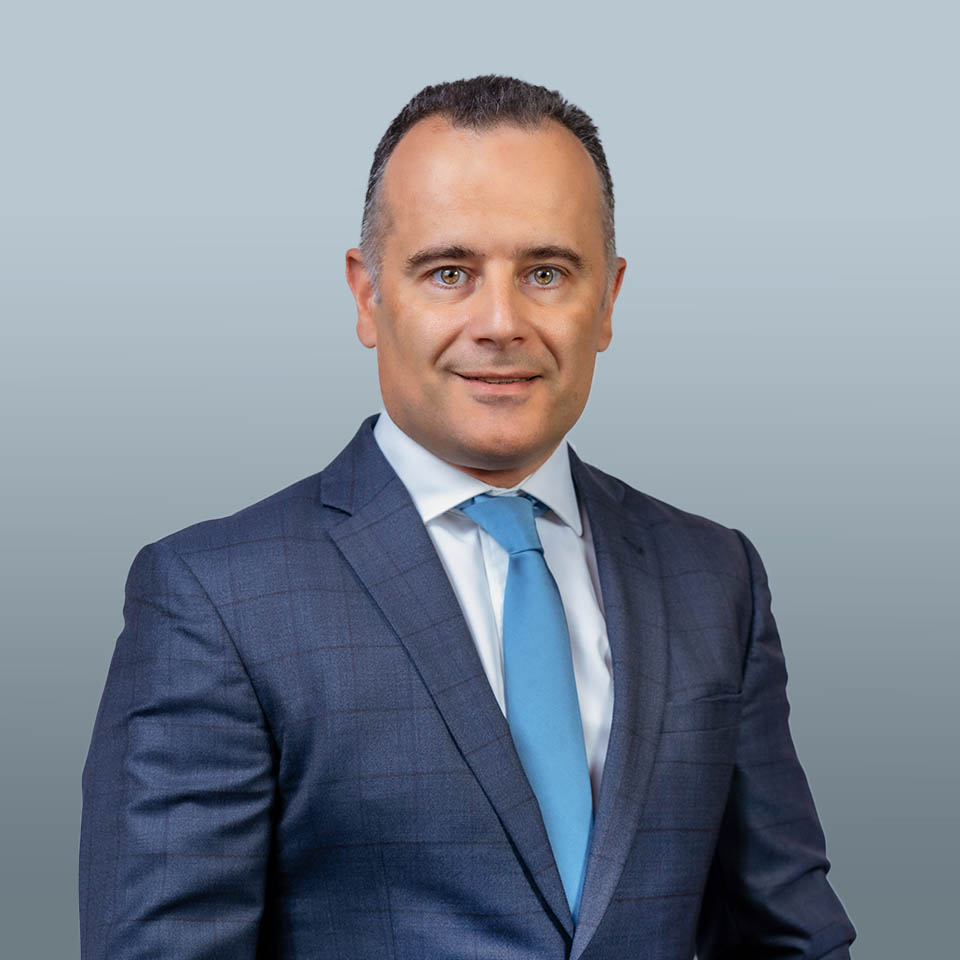
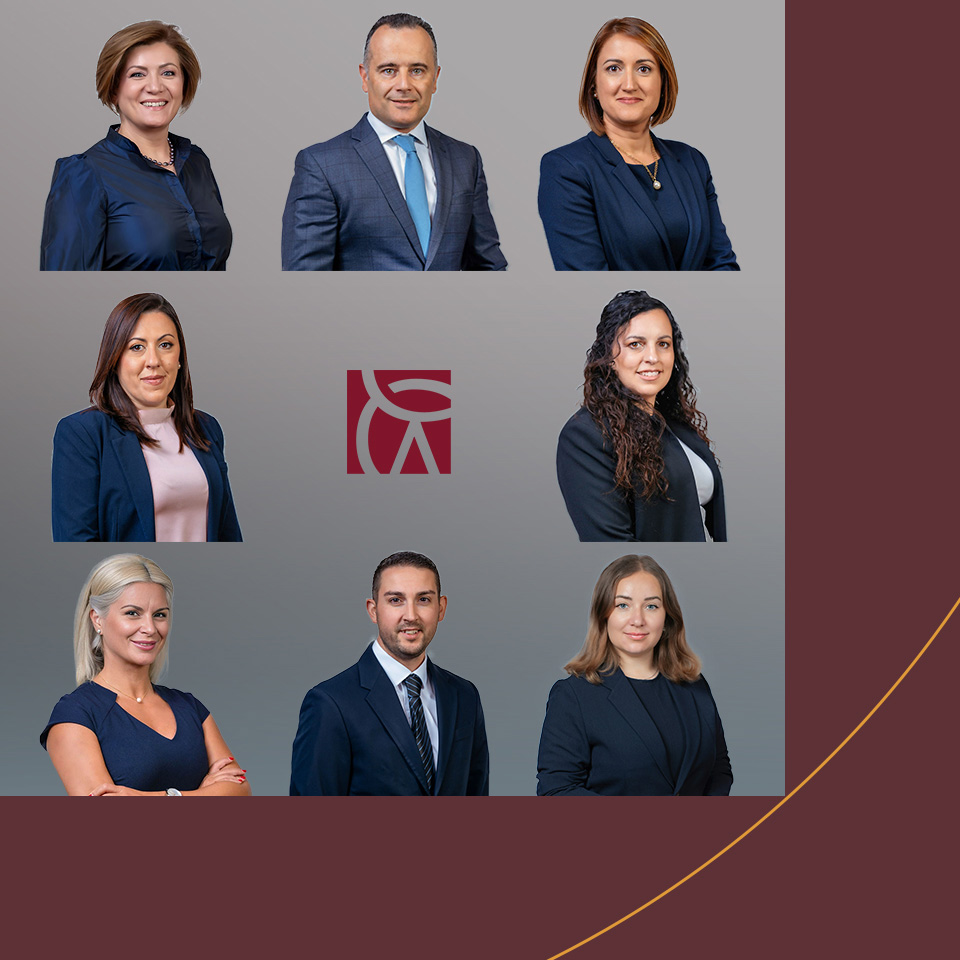
Dr Jean-Philippe Chetcuti, BA, LLM, LLD, TEP is a senior Maltese lawyer and co-founding partner of CCLEX, with over 25 years’ experience advising high-net-worth and ultra-high-net-worth individuals, families, entrepreneurs, and family offices on international tax, immigration, and private client law. His practice focuses on residence, citizenship, and cross-border structuring within the European Union and select international jurisdictions. He is widely recognised for his thought leadership on the doctrine of contributive belonging, advancing the view that modern citizenship and residence frameworks must be grounded in genuine contribution, integration, and long-term alignment with the host state, rather than transactional or purely financial criteria. This work has been particularly influential in shaping legal discourse around merit-based citizenship and residence frameworks in Malta and across Europe. Dr Chetcuti is also known for articulating and developing the concept of residency and citizenship as a distinct asset class, analysing these statuses not merely as immigration outcomes but as strategic legal assets characterised by durability of rights, mobility, intergenerational continuity, and regulatory resilience. This thinking underpins the CCLEX Mobility Assets Spectrum™, a proprietary analytical framework used to assess, compare, and structure global mobility options for internationally mobile families and entrepreneurs.
He has served as Chairman of STEP Malta, has contributed to the STEP Journal, Investor Migration Daily, and other specialist publications, and is a frequent lecturer and speaker on EU residence and citizenship law, international tax planning, and global mobility policy. His work is distinguished by a practical, multidisciplinary approach, integrating legal analysis, tax structuring, and relocation strategy to deliver compliant and future-proof outcomes for complex cross-border clients.
Dr Priscilla Mifsud Parker, BA, MA, LLD, TEP, is a senior Maltese lawyer and partner at CCLEX, advising high-net-worth individuals, families, and entrepreneurs on European residence and citizenship law, cross-border private client structuring, and international tax considerations. She heads the firm’s Families & Wealth practice group and has extensive experience advising U.S. and other non-EU nationals on Malta residence, permanent residence, and citizenship by merit frameworks. Dr Mifsud Parker has held the position of Chairperson of STEP Malta, is a member of the Maltese Chamber of Advocates, and a frequent contributor and speaker on private client, tax residence, and global mobility matters, combining technical rigour with a practical, multidisciplinary advisory approach.
FAQs
[question]Can Americans get European citizenship in 2026?[/question][answer]Yes, through three lawful routes: citizenship by descent where an ancestor qualifies, naturalisation after a period of legal residence, and, rarely, discretionary merit-based citizenship such as Malta or Austria provide. Each country applies its own nationality law, and following the 2025 Court of Justice ruling, none can be obtained through a fixed payment or investment.[/answer]
[question]Is there still a European citizenship by investment programme?[/question][answer]No. In Commission v Malta (C-181/23, 29 April 2025), the Court of Justice held that granting nationality in exchange for predetermined payments or investments infringes Article 20 TFEU. Investment-linked residence permits remain in some countries, but they do not confer citizenship.[/answer]
[question]Can Americans hold dual citizenship with a European country?[/question][answer]US law does not require Americans to give up US citizenship when acquiring another nationality, but each European country sets its own rules on dual nationality. Some permit it freely, others restrict it or require renunciation. The position should be checked country by country before any application is lodged.[/answer]
[question]Which European countries offer citizenship by descent to Americans?[/question][answer]Ireland admits applicants with an Irish-born grandparent through the Foreign Births Register, and Austria's section 58c covers descendants of persons persecuted under the Nazi regime. Italy still recognises descent, but only within narrow limits since Law 74/2025. Other countries apply their own ancestry rules, so eligibility is assessed jurisdiction by jurisdiction against civil-status records.[/answer]
[question]Does Italian citizenship by descent still work for Americans?[/question][answer]Only within narrow limits. Since Law 74/2025, a person born abroad who holds another nationality is deemed never to have acquired Italian citizenship unless an exception applies, such as a parent or grandparent holding exclusively Italian citizenship, or an application lodged by 27 March 2025. The Constitutional Court dismissed the Turin challenge in April 2026 but referred EU-law questions to the Court of Justice in July 2026, and the law remains in force meanwhile.[/answer]
[question]How long does Portuguese naturalisation take for Americans after 2026?[/question][answer]Under Lei Orgânica n.º 1/2026, in force since 19 May 2026, naturalisation generally requires 10 years of legal residence for nationals of countries outside the EU and the Portuguese-speaking community, up from five. Integration and criminal-record requirements are stricter, and holding a golden visa does not by itself shorten the period.[/answer]
[question]Can a golden visa lead to European citizenship?[/question][answer]Only indirectly. A golden visa grants residence, and citizenship follows only if the holder later satisfies the ordinary naturalisation conditions of that country, typically years of genuine legal residence, integration and language requirements. Greece, for example, generally requires seven years of residence. Residence permits should not be treated as a shortcut to a passport.[/answer]
[question]What is citizenship by merit, and which countries grant it?[/question][answer]Citizenship by merit is discretionary naturalisation granted for exceptional contribution or national interest, not for payment. Malta and Austria are the main EU examples. There is no entitlement to a positive outcome, and each application is assessed on its evidence of contribution.[/answer]
[question]Do Americans still pay US tax after acquiring European citizenship or residence?[/question][answer]Yes. US citizens are taxed on worldwide income wherever they live, and a second nationality does not change that. Exclusions and foreign tax credits may reduce double taxation, but only by filing a US return. Foreign accounts may also trigger FBAR and Form 8938 reporting, so tax advice should accompany any mobility plan.[/answer]
[question]What is the difference between European residence and European citizenship?[/question][answer]Residence is a permission to live in a country, usually subject to renewal, conditions and policy change. Citizenship is a lasting legal bond carrying the right to a passport, to remain indefinitely and, in EU Member States, to EU free movement. Residence leads to citizenship only where national naturalisation conditions are met.[/answer]
[question]Does the Spain Golden Visa still exist?[/question][answer]No. Spain ended new applications for its investor residence permit on 3 April 2025 under Organic Law 1/2025. Anyone considering Spain should seek advice on the residence routes that remain available, as none confers citizenship.[/answer]
[question]Who can qualify for Malta Citizenship by Merit, and can AI founders apply?[/question][answer]Maltese law recognises scientists, researchers, athletes, artists, cultural performers, entrepreneurs, philanthropists and technologists, among other persons of interest, whose exceptional services or contribution benefit Malta or humanity. AI founders and researchers may fall within these categories by proving significant national interest impact.[/answer]